Diskusjon Triggere Porteføljer Aksjonærlister

Novo, formerly known as Novo Nordisk

Ozempic Jab’s Creator Needs a Second Act. Pills May Be the Answer.

Novo Nordisk’s chief executive, Mike Doustdar, is a year into a corporate turnaround. He says investors are still underestimating the promise of the company’s drugs.

Klikk her for wall of text

For Novo Nordisk, the Danish drugmaker behind Ozempic and Wegovy, the release of its weight-loss pill has been a much-needed triumph.

It was a scientific breakthrough to make an effective tablet form of Wegovy, a weekly injection. It was also a commercial success: More than 1.5 million people, mostly in the United States, have started taking the daily pill since it became available in January.

But the company’s investors have not been dazzled. They are nervously looking further into the future. The key U.S. patent on semaglutide, the active ingredient in Wegovy, will expire early in the next decade.

Just a few years ago, Novo Nordisk was the darling of the health care industry. It had pioneered a single drug with benefits that went beyond weight loss to heart, liver and other cardiovascular diseases.

Today Novo’s share price is languishing about 70 percent below its peak from mid-2024, when it was Europe’s most valuable public company. Investor sentiment is still shaky even after the company said last month that sales and profit would not fall as much as expected this year.

As Mike Doustdar, Novo Nordisk’s chief executive, sees it, investors are missing the big picture. They are too focused on the company’s rivalry with the American drugmaker Eli Lilly. They are not appreciating the variety of drugs Novo has available and in development.

“We have more assets than people are giving us credit for,” Mr. Doustdar said in an interview with The New York Times. “In a world where people need more treatment medications, it’s not a zero-sum game.”

Customers, Not Patients

Mr. Doustdar’s desire to bring a new energy to the company, and revive its fortunes, is evident in the intense way he talks about the company’s naysayers. His voice is often loud, even assertive. “We haven’t lost it,” he said.

He took over in August 2025 in uncomfortable circumstances. The previous chief executive had been forced out a few months earlier by the company’s principal shareholder and board member, the Novo Nordisk Foundation. In October, the company’s chair and all the independent board members quit.

The situation became more fraught after Lars Rebien Sorensen, the chair of the foundation’s board, installed himself as chair of the company’s board. The dual role of Mr. Sorensen, who is also a former chief executive of Novo, unnerved some shareholders, including Norway’s oil fund.

But drastic change was necessary. Novo began the modern era of weight-loss drugs, known collectively as GLP-1s, but had lost much of its lead to competition from Eli Lilly and cheaper compounding pharmacies. And there had been a steady drumbeat of bad news: profit warnings, forced price cuts, disappointing trials and slowing prescription growth.

In a first, painful step, Novo laid off about 9,000 employees, the largest restructuring in Danish corporate history.

One big shift in the past year has been rhetorical. Mr. Doustdar speaks frequently about serving customers, not just treating patients. He wants the company to cater to anyone who needs the drugs, without judgment about why. Being able to buy weight-loss drugs with a prescription, but without an in-person doctor’s visit, can support people who suffer from shame and depression because of their weight, he said.

That has raised the question — internally and externally — whether Novo is becoming a cosmetics company. This debate, Mr. Doustdar said, is a distraction.

“We have science that works and is safe and efficacious, and there are customers that need it,” he said. “It’s irresponsible not to go in that direction.”

An American Mind-Set

Novo Nordisk has sharpened its commercial instincts — and its elbows — as Mr. Doustdar seeks to prove the company’s best days aren’t in the past.

It is rebranding Rybelsus, which in 2019 was the first semaglutide pill approved for Type 2 diabetes, to “the Ozempic pill,” belatedly taking advantage of the brand recognition. The company is also increasingly litigious. It had taken legal action against more than 150 companies over various claims, and last month sued Eli Lilly over “deceptive advertising” in the United States.

The company is starting to appear more American. Even with its 103-year Danish history, Novo makes more than half of its sales in the United States, where it employs 10,000 people. The number of Novo workers in Denmark shrank by 13 percent last year but grew in the United States by the same proportion.

Whether consciously or not, that shift is a reflection of Mr. Doustdar. He is the company’s first non-Danish leader. He was born in Iran and is an Austrian national who grew up in the United States. Mr. Doustdar has been at Novo Nordisk for more than 30 years, but primarily in international operations, so he had never worked at headquarters in the Copenhagen suburbs.

Mr. Doustdar emphasized the company’s American ties when he was negotiating last year with President Trump, who was threatening to impose tariffs on imported medicines. The company is plowing ahead with a $4 billion expansion in Clayton, N.C., next to a production facility it opened 30 years ago.

For American consumers, Novo Nordisk makes the Wegovy pill from start to finish in North Carolina, across two locations in Clayton and Durham, which are about an hour’s drive apart.

Buying Time

Are any of these changes enough to convince investors that Novo’s future is not as grim as its share price suggests?

Companies can reverse their ill fortunes. But the successes, like those of Microsoft and Best Buy, are few and far between.

“You’re more likely to get a Nokia than a Microsoft,” said Randall Peterson, a professor of organizational behavior at London Business School, referring to the Finnish company that lost an early lead in the cellphone business.

Hassan Chowdhry, a portfolio manager at GMO Asset Management, said he had divested from Novo Nordisk this year. The trigger was the disappointing trial results of CagriSema, Novo’s next-generation weight-loss drug, which is expected to be available early next year, subject to U.S. approval. In February, Novo failed to prove it was more efficacious at weight loss than an existing Eli Lilly drug it would compete with.

While Mr. Chowdhry expects weight loss to be a $150 billion market with plenty of room for two big players, he said that Novo had a long way to go before it could release a really competitive product. For example, another drug, Zenagamtide, is likely years away from coming to market.

“There doesn’t seem to be any catalyst in the immediate term that might push the stock up in a major way,” Mr. Chowdhry said.

Some analysts and Novo shareholders want the company to diversify, possibly through acquisitions. Nearly 95 percent of its sales came from diabetes and obesity medicines in the first half of 2026. Eli Lilly, by comparison, has growing investments in neuroscience and immunology.

Among those vocal investors is Markus Manns, a portfolio manager at Union Investment in Frankfurt, who owns shares in both companies. Novo Nordisk, he said, is “still lacking a vision for sustainable growth,” though he is hopeful the company will detail one at an investor meeting this month.

The constant comparisons with Lilly frustrate Mr. Doustdar. For investors, the rivalry has become like an “obsession,” he said.

But the comparisons with Lilly will be hard to shake, especially because the company is expected to seek U.S. approval for its next-generation drug, retatrutide, early next year.

So what will change the sentiment about Novo Nordisk? “Time,” Mr. Doustdar said.

CagriSema promises to be a test case. Though investors aren’t enthusiastic about it, the drug will be available relatively soon.

“It’s a much better drug than right now investors are writing in their models,” Mr. Doustdar said. “But like I said, I don’t need to sell this to investors. I need to sell these to physicians who understand the biology better.”

https://www.nytimes.com/2026/09/01/business/novo-nordisk-ozempic-wegovy-glp1s-stocks.html

Zenagamtide fase 3 i diabetes dukket opp på clinicaltrials

https://clinicaltrials.gov/study/NCT07797335
https://www.tv2.no/nyheter/medisinen-gir-nytt-hap-for-hundretusener-av-nordmenn/19136000/

3 Likes

Setupen her er uendret, 338 og over

3 Likes

Ja, men kommer den seg noensinne dit?

At ledelsen hamrer nevene i bordet og roper “VÅr PiPE eR BEDRe En Ale DerE InvestOR-Tullinger TRor!!” ser ikke ut til å hjelpe nevneverdig :-/

Novo må fikse hullene i pipen sin, i stedet for å late som noe ikke er råttent i DK

2 Likes

Mulig at CMD 21.september og EASD presseslipp (kan vel komme nårsomhelst, final program ble sluppet på mandag) kan bygge forventninger de neste ukene

Men tipper for å bryte 338 så må de virkelig komme med noe snacks på CMD. Spesielt når man vet at Eli Lilly sin Tirz+Eloralintide vil komme til å stjele EASD overskrifter med opp mot 30% vektreduksjon

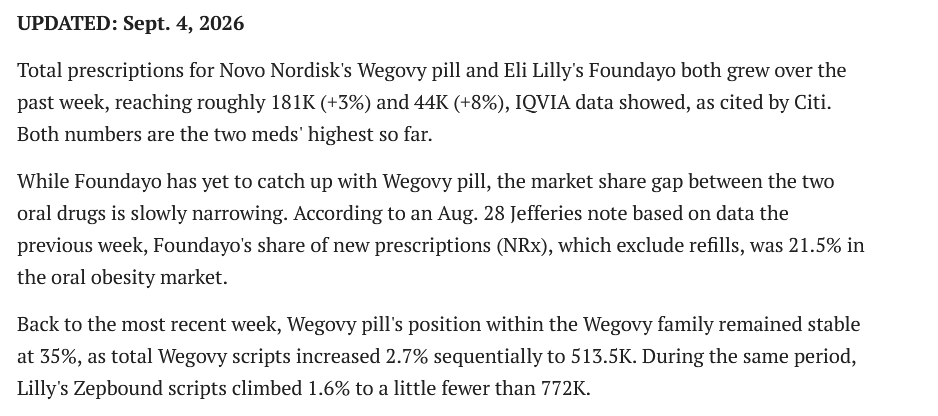
IQVIA oppdatering 4 sep:

Man ser vel her at Medicare bridge ikke har gitt store utslag på pilleversjonen virker det som. Har vel kommet info om at over 600k seniorer har startet, så kan tyde på at veldig mange velger injeksjoner

2 Likes

https://endpoints.news/novo-nordisk-cans-two-more-trials-of-il-6-heart-drug-for-futility/

Novo Nordisk has ended work early on two more late-stage studies of its IL-6 inhibitor ziltivekimab after the studies’ data monitoring committee determined there was little chance of them succeeding.

A spokesperson told Endpoints News that the HERMES and ATHENA trials, looking at the shot in heart failure, have been stopped early after the committee looked at “the totality of the data (including the low likelihood of a different outcome from ZEUS).” The Phase 3 ZEUS trial was disclosed as a failure, shocking investors, in July.

Another trial, called ARTEMIS, remains ongoing. It is testing the drug in patients who have had a heart attack, with data expected to read out in the first half of 2027. But the repeated disappointments so far undermine the theory behind IL-6 inhibition in heart disease — namely that reducing inflammation can help patients with cardiovascular disease — so hopes of this study might be fading too.

1 Like

Nanexa har stedet ~50% siste mnd på det markedet antar er en kommende deal med Novo Nordisk. Åpenbart stort for Nanexa, men hvor stort er potensialet for Novo dersom injeksjoner kan gjøres månedlig eller kvartalsvis i stedet for hver uke?

Novo Nordisk STEP Young phase 3 data: 40.4% of children living with obesity achieved a BMI below the obesity threshold with semaglutide and lifestyle modification

2026-09-07 12:00:00

Data highlights

  • The STEP Young phase 3 trial met its primary endpoint, demonstrating greater body mass index (BMI) reduction in children aged 6 to under 12 treated with once-weekly subcutaneous semaglutide compared with placebo
  • Both groups received lifestyle modification throughout the trial, including reduced-calorie diet and increased physical activity
  • 40.4%* of the children treated with semaglutide were no longer classified as having obesity** after 68 weeks compared with non (0%) treated with placebo
  • The overall safety and tolerability of semaglutide were consistent with those seen in adults and adolescents trials with semaglutide

Bagsværd, Denmark, 7 September 2026 – Novo Nordisk today announced first results from the STEP Young phase 3 trial, evaluating once-weekly semaglutide in combination with a reduced-calorie diet and increased physical activity in children aged 6 to under 12 years old with obesity. Obesity prevalence is growing in this age group, for whom there are limited clinically tested and approved treatments available when lifestyle modifications are not sufficient.

At baseline, more than 85% of the children had either class II or III severe obesity (corresponding to a BMI above or equal to 35 and 40 in adults, respectively). The trial met its primary endpoint demonstrating superior BMI reduction at week 68 in the group taking semaglutide compared with the placebo group. The results showed that 40.4%* of those treated with semaglutide were no longer classified as having obesity** at week 68, compared with none of those treated with placebo. This means that semaglutide helped two out of five of the children reduce their BMI to a normal weight or overweight classification compared with none of the children in the placebo group. Both groups received lifestyle modification throughout the trial, including reduced-calorie diet and increased physical activity.

“Childhood obesity is particularly concerning due to both immediate and enduring impacts on health, including a strong predilection to adult obesity and increased risk for the early emergence of obesity-related complications,” said Ania M. Jastreboff, MD, PhD, Professor of Medicine (Endocrinology) and Pediatrics (Pediatric Endocrinology) at the Yale and Director of the Yale Obesity Research Center (Y-Weight). “Most of the children in the STEP Young trial were classified as having severe (class II or III) obesity at baseline, yet treatment with semaglutide resulted in a BMI percentile category below the obesity threshold in approximately 40% of the children within about a year of treatment,”

Children living with obesity experience cardiovascular disease risk factors, alongside depression, eating disorders, and bullying, with studies showing that their quality of life is comparable to children undergoing cancer treatment.1-3 Without effective intervention, childhood obesity strongly tracks into adulthood1, where obesity-related complications emerge earlier and more severely,1-3 substantially shortening life expectancy.4 An estimated 177 million children aged 5 to 19 were living with obesity in 2025, and this figure is projected to rise to 228 million by 2040.5

"For children living with obesity and their families, health challenges can begin early and affect wellbeing throughout life,” said Martin Holst Lange, executive vice president, chief scientific officer and head of Research & Development at Novo Nordisk. “As a pioneer in paediatric obesity medicine, we are encouraged by the positive STEP Young results and semaglutide’s potential to help children living with obesity who need medical treatment, alongside lifestyle changes, to better manage their obesity. This may prevent serious health risks later in life.”

The overall safety and tolerability of semaglutide observed in STEP Young were consistent with previous Novo Nordisk paediatric and adult trials with semaglutide and liraglutide, and no new safety concerns were identified. Furthermore, no safety concerns were identified for growth or pubertal development.

Detailed STEP Young results will be presented at The Obesity Society’s annual meeting ObesityWeek 2026, 14-17 November in Washington DC, United States.

  • Based on the trial product estimand: treatment effect if all children adhered to treatment
    **Based on CDC.gov sex- and age-specific BMI growth charts. Using percentiles to define BMI categories in children is important because they are still growing. In children, obesity is defined as a BMI at or above the 95th percentile for age and sex. Obesity classes II and III in children are defined as a BMI ≥120% and ≥140% of the 95th percentile, respectively.
1 Like

Største verdien ligger vel i at de kan forlenge patenttiden, kan være veldig stor verdi

4 Likes
4 Likes

Føler Novo er litt stuck i steinalderen, og så syter over at de ikke har hevet seg på bronse

Noen drypp fra Lexicon presentasjon hos City nå nettopp (litt klipp og lim, transkripsjon nederst i lenke):

… Still, management described the company’s financial position as improved because of the Novo Nordisk deal for LX9851, an ACSL5 inhibitor in obesity and metabolic disease.

  • The Novo transaction was described as “a very lucrative deal for a preclinical asset.”
  • Management said the partnership gave Lexicon more financial flexibility.
  • The company said the deal reduced pressure to fund operations through asset sales or dilutive financing."
  • In the coming 6 months, Phase II development of LX9851 with Novo Nordisk in weight management.

Lexicon did not provide exact payment terms for the Novo agreement, but executives said the deal was strategically important and helped support the company’s current operating plan.

…On the Novo side, executives said the partner is moving quickly with LX9851 and has described the asset as mission critical. Novo has highlighted the program in public statements and corporate materials. Lexicon said early mouse data showed “pretty incredible” weight loss results both as monotherapy and when combined with semaglutide.

Management said LX9851’s ACSL5 mechanism acts early in triglyceride metabolism in the gut and liver. It could have uses beyond obesity, including MASH and lipid management. The company said Novo’s focus on oral combination therapy fits well with the once-daily oral profile of the asset.

https://uk.investing.com/news/stock-market-news/lexicon-pharmaceuticals-at-citi-summit-hcm-data-t1d-reset-93CH-4863036

1 Like

Hva er det de pønsker på i Bagsværd nå?

Denmark’s Novo Nordisk said ‌on Thursday its blockbuster weight-loss drug Wegovy ​had been ​approved in China as the ⁠first GLP-1 ​RA class of drugs ​for the treatment of metabolic dysfunction-associated steatohepatitis (MASH).

https://www.reuters.com/business/healthcare-pharmaceuticals/novo-nordisk-says-wegovy-approved-china-liver-disease-mash-2026-09-10/

1 Like
2 Likes

Ser for meg møtet i Novostyret har vært ca. som dette:

Edit: Ja, jeg er en smule frustert med Molbo Mordi Incorporated, for å si det sånn

Har det noensinne kommet noe godt ut av et allmøte?

(Bortsett fra hvit dame)

Jeg hadde kanskje trodd at kursen skulle gå litt mot CMD, men glemmer jo det gamle ordtaket “Når Novo snakker, synker kursen”

Så er jo klart når NOVO skal snakke i noen timer(?) så går jo kursen som forventet, bare feil vei for min egen del :joy:

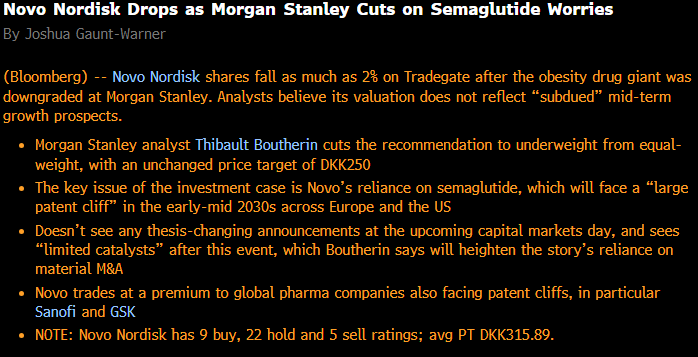
https://uk.investing.com/news/stock-market-news/morgan-stanley-downgrades-novo-nordisk-stock-rating-on-growth-concerns-93CH-4865796

Ser også ut som denne ukens pille tall er flat (litt ned)

Edit: IQVIA data ute:

UPDATED: Sept. 11, 2026

Both Novo Nordisk’s Wegovy pill and Eli Lilly’s Foundayo saw their highest total prescriptions so far over the past week as the companies’ oral obesity battle continues to play out.

According to IQVIA data cited by Citi, the Wegovy pill reached an approximate 183K total scripts for the most recent reporting period, versus 181K the week prior. Foundayo, for its part, climbed nearly 8% to reach 47.5K scripts. Citi analysts emphasized that IQVIA may still be missing some Foundayo prescriptions made through telehealth channels.

Meanwhile, using the last four weeks as a guide, total GLP-1 prescriptions have increased by 5.4%, compared to a 6.8% decline the prior year, the Citi team said. Citi analysts attributed the 12-percentage-point swing to the expansion of oral GLP-1 therapies, which is likely broadening access to the class and drawing in new patients.

Across the broader landscape, Lilly’s tirzepatide currently holds a nearly 57% share of the total GLP-1 market, compared to around 49.5% last year, while Novo’s semaglutide has stayed relatively flat at a 37% share, the analysts added.

3 Likes

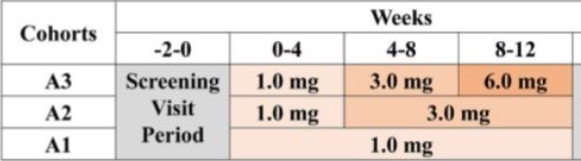
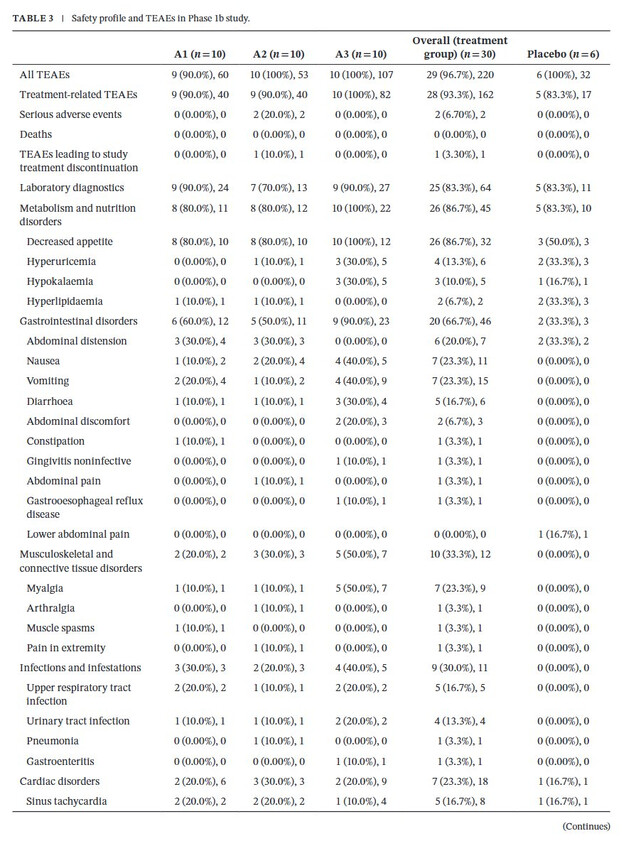
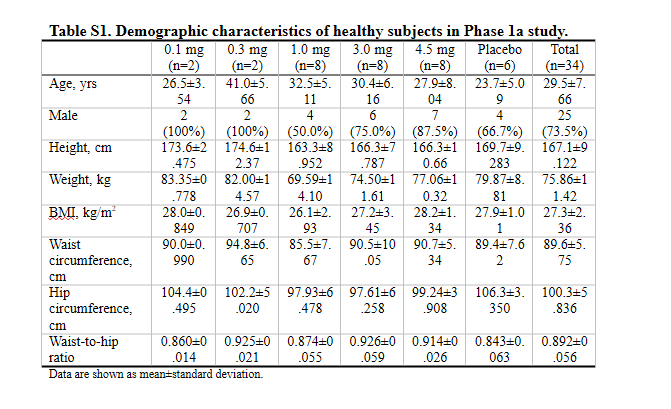
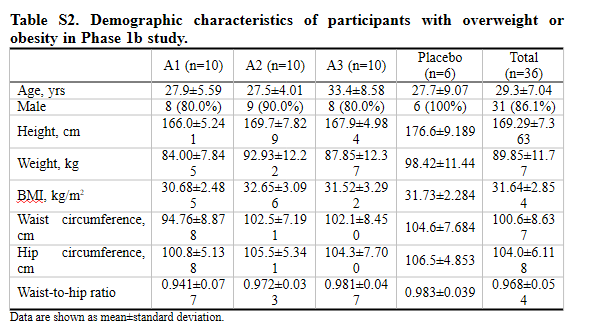
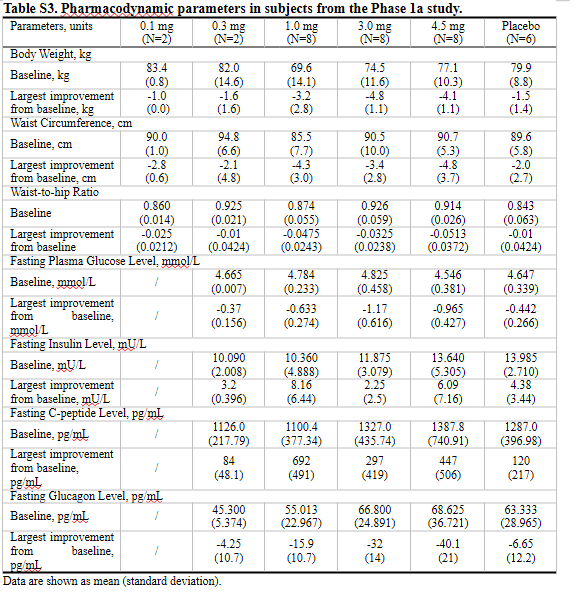
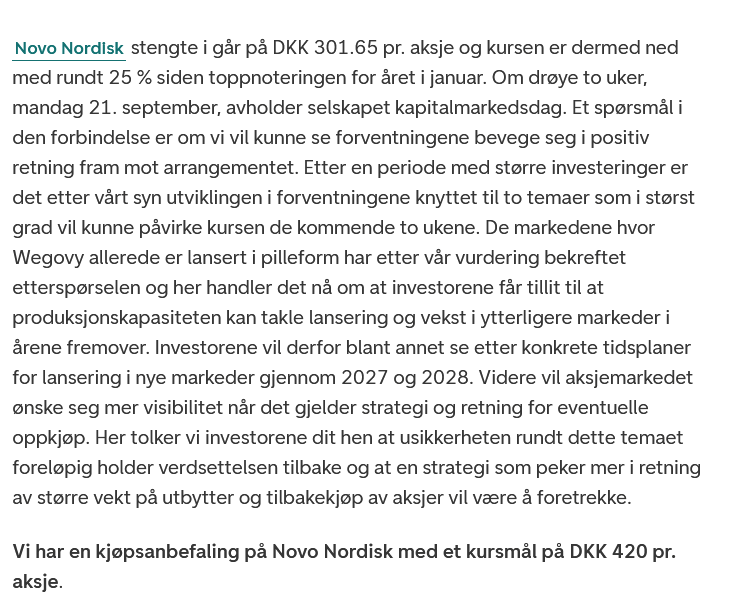
UBT251 fase 1 publikasjon ute

https://pubmed.ncbi.nlm.nih.gov/42712041/

AE hentet fra X

image
image

Demographic 1a

image

Demographic 1b

image

Pharmacodynamic parameters 1a

image

Pharmacodynamic parameters 1b

image

“Lasting health starts now”

Desuden kommer Novo til at justere sit logo, så den velkendte Apis-tyr vendes om, så den fremover kigger mod højre.

https://ekstrabladet.dk/penge/novo-nordisk-skifter-navn/11288748

1 Like