
Fra Endpoint; RiboX Therapautics har tilsynelatende skjult dødsfall i In-vivo Car T forsøk
A patient with an autoimmune disease has died after receiving an experimental genetic medicine from a biotech startup in China, Endpoints News has learned.
The Shanghai-based company, RiboX Therapeutics, recently received a green light from the FDA to begin a clinical trial of the treatment in the US, which the company announced on Aug. 8. But RiboX did not publicly disclose the death in the earlier study until questioned by Endpoints.
A man in his 50s with a condition called systemic sclerosis died in March after receiving RiboX’s therapy, a person with direct knowledge of the incident told Endpoints on condition of anonymity, fearing backlash.
A RiboX spokesperson confirmed to Endpoints that the death occurred in a patient with “severe systemic sclerosis and significant pre-existing medical issues.” The company “promptly reported” the death in China to “the relevant ethics and regulatory authorities in accordance with local requirements” and also reported it to the FDA, according to the emailed statement. But the spokesperson would not provide any additional information on the patient or their cause of death.
“Beyond regulatory reporting obligations, we cannot comment on specific patient cases or causality assessments due to patient privacy and regulatory requirements,” the spokesperson said.
The fatality is the third uncovered in recent weeks. All three occurred in investigator-initiated trials, or IITs, which are a popular way for researchers and biotech companies to quickly and cheaply test experimental drugs without oversight from the country’s national drug regulators.
RiboX’s treatment, called RXIM002, belongs to a red-hot class of experimental medicines known as in vivo CAR-T therapy. The goal is to reprogram a patient’s T cells to destroy misbehaving B cells, which are the cause of many autoimmune diseases and blood cancers.
Unlike commercial CAR-T therapies, which require removing a patient’s cells and engineering them in the lab, the in vivo approach uses an infusion or injection to do the reprogramming directly inside the body. Companies say it could make CAR-T therapies more affordable and accessible.
Yet CAR-T is inherently risky. The approach can sometimes cause runaway immune responses that scientists are still trying to understand. The patient in RiboX’s trial appeared to experience one of those responses known as cytokine release syndrome before he died, the person familiar with the incident said.
No autopsy was performed, the source said, preventing others in the field from learning the exact cause of death and what might have contributed to it.
The source said RiboX was in talks with multiple global pharma companies who were interested in buying the program, and the death put a damper on those talks. The company declined to comment on its commercial prospects.
While RiboX was running its IIT in China, the company was also looking to start a trial in the US. Chinese companies seek FDA clearance to bolster their credibility with potential investors and pharma partners.
“The IND submission reviewed by the FDA before clearance included comprehensive safety and efficacy data from all IIT studies, including information related to this adverse event,” the company said in a statement sent to Endpoints early Tuesday.
An FDA spokesperson declined to comment on the company or whether it disclosed the death before it cleared the Investigational New Drug requirement needed to start human testing in the US. “FDA generally does not discuss information regarding a pending IND,” the spokesperson said.
Trust in Chinese trials at risk
Rumors of the death have been circulating among Chinese biotech leaders for months.
A leader at another genetic medicine startup in China, who did not want to be named — concerned that their company would face consequences — told Endpoints they worried the death could devastate trust in both China’s booming biotech industry and the in vivo CAR-T field.
The three newly revealed IIT deaths are spurring increased scrutiny of a fast-and-loose pathway for testing experimental therapies in China, just as the country is in the process of tightening the system.
Last fall, China announced plans to restrict the use of IITs to certain kinds of highly experimental medicines, mainly cell and gene therapies. It also limited the trials to top-tier hospitals and required the trials to be cleared by China’s hospital regulators, although IITs still escape purview of the country’s version of the FDA. The rules went into effect in May and appear to have slowed the pace of many IITs.
There is still no requirement to publicly report deaths from IITs, several Chinese biotech executives told Endpoints.
Endpoints spoke to dozens of scientists, investors, drugmakers and bioethicists in the wake of those first two revealed deaths — one in a young girl with a neurological disease that was first reported by Science and Retraction Watch, and a second in a young boy with muscular dystrophy first reported by STAT.
A number of American biotech leaders and academic researchers interviewed told Endpoints they harbored fears that those two incidents were only the tip of the iceberg.
It’s unclear how many more deaths from China IITs have gone unreported, although hearing of a third case that appears to have been swept under the rug may raise suspicions further.
Questions about two cutting-edge technologies
The lack of transparency has big implications for patient safety, for dealmaking between Western drugmakers and smaller Chinese biotech startups, and for helping other scientists improve the safety and efficacy of promising but unproven treatments.
The death is likely to draw scrutiny not only of China IITs, but of the two technologies that the company is working on: in vivo CAR-T and a second generation of mRNA medicines known as circular RNA.
There are numerous theoretical risks with both technologies, which are only just beginning to enter clinical trials.
RiboX boasted in a press release earlier this month that it was the first to get FDA clearance to test an in vivo CAR-T therapy based on circular RNA. That permission to proceed put it ahead of three treatments designed by well-funded circular RNA companies in Boston — Orna Therapeutics, Orbital Therapeutics and Laronde, now called Sail Biomedicines — that are also focused on in vivo CAR-T. None of them have begun clinical trials yet.
Two of those circular RNA companies have been purchased by pharma companies in the past year: Bristol Myers Squibb acquired Orbital for $1.5 billion in October and Eli Lilly acquired Orna for up to $2.4 billion in February. And at the end of July, Johnson & Johnson struck a deal with Sail worth $785 million upfront, with the option to buy the company for another $2.58 billion.
It is unclear whether the death in RiboX’s study is at all attributable to toxicity from the circular RNA molecule or from the lipid nanoparticles used to deliver it to T cells, although both are possibilities.
The death could also be more directly related to how the immune cells acted after they were reprogrammed, rather than the genetic molecules used to reprogram them. But without an autopsy report and additional information about the patient’s demise, it is hard to tease apart, a number of people told Endpoints.
The person familiar with RiboX’s study said there was disagreement within the company about whether the man should have been enrolled in the study at all. Before the treatment, he was found to have myocarditis — inflammation of the heart muscle — and an active viral infection, the source said. There was debate about whether to proceed with the treatment in a patient whose immune system was already under duress.
RiboX did not confirm the patient’s medical status, but said that a “fair assessment of the circumstances and potential causation must take proper account of his underlying condition and complete medical history.”
Scientists not involved with RiboX say that learning more details about the cause of the death is vital for ensuring that this class of medicines can continue to be developed safely. By some estimates, well over 100 companies around the world — and by some accounts, more than 100 alone in China — have programs to develop in vivo CAR-T therapies.
A previous death from an experimental in vivo CAR-T therapy for cancer, developed by EsoBiotec and now owned by AstraZeneca, was revealed in a Nature Medicine paper in March. That treatment was based on a different genetic technology that used engineered viruses, instead of RNA and nanoparticles, to deliver the instructions for reprogramming T cells inside the body.
The patient who died in that trial developed severe cytokine release syndrome and a form of neurotoxicity that’s linked to CAR-T therapies, before experiencing cardiac arrest 19 days after the treatment was administered, according to the report. It took roughly a year for that death to come to light, even though earlier, promising results from other patients in the study were disclosed far sooner.
RiboX and its history
RiboX was founded in 2021 amid peak excitement for mRNA technology, which had just led to the first Covid-19 vaccines. But there were lingering challenges in making more medicines out of the short-lived messenger molecule. And RiboX was at the forefront of trying to solve them.
The mRNA used in vaccines is a string of genetic code whose loose ends are easily destroyed by RNA-chomping enzymes. While a quick burst of expression from the genetic molecule was sufficient for a vaccine, it wasn’t strong enough for most other applications. Nature offered a potential fix.
Some mRNA molecules that mysteriously looped back on themselves to form circles are comparably resistant to degradation. Even as scientists were still trying to figure out what these circular RNA molecules did, drug designers spotted an opportunity to copy the blueprint and make more durable medicines.
RiboX was one of the stealthier startups pursuing that work. The company was co-founded by RNA biologist Ling-Ling Chen at the Shanghai Institute of Biochemistry and Cell Biology in China. Another co-founder, Tel Aviv University scientist Dan Peer, provided expertise on lipid nanoparticles used to deliver the circular RNA into cells, and the company kept some of its scientists in a lab in Israel.
Weiyi Zhang, the startup’s CEO, got her PhD at Ruhr University Bochum in Germany in 2007 before moving back to China, where she led outposts for the German pharma companies Bayer and Boehringer Ingelheim before co-founding RiboX.
Weiyi Zhang
The startup never formally announced its funding or listed its investors, as is common with biotech companies in the US. Last year, Endpoints reported that RiboX had raised $110 million according to LinkedIn profiles of people associated with the company, and that RiboX’s investors included Boehringer Ingelheim Venture Fund, Eisai Innovation, Lilly Asia Ventures, Qiming Venture Partners, Temasek and Vivo Capital.
Boehringer Ingelheim and Vivo Capital confirmed their investment in the company last year, but RiboX wouldn’t confirm how much money it has on hand or its full investor list. An investor at Boehringer Ingelheim declined to comment on questions about the patient’s death, and RiboX’s other investors either did not respond or would not comment.
Zhang has also declined multiple interview requests from Endpoints. Last year, she said via email that she wanted the company to “stay below the radar as much and as long as we can.”
Dette er megagode nyheter for alle som driver med kreftvaksiner!
Moderna opp 50% i pretrade,
Biontech opp 10% i pretrade.
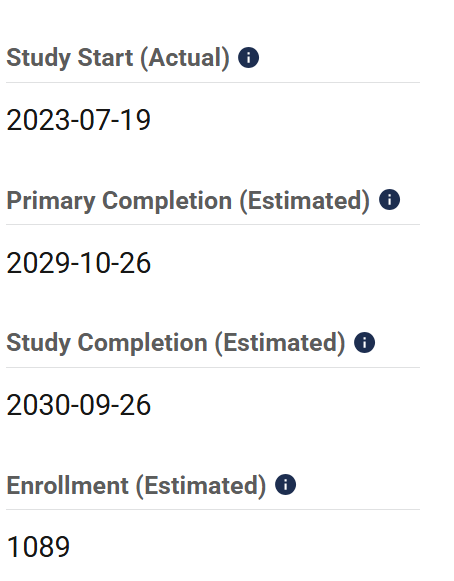
1.089 pasienter i studien totalt, men dette er vel interim resultater å antagelig ett litt mindre antall pasienter. Likevel stort nok til å dra gode konklusjoner!!!
Og igjen ett godt eksempel på at biotech krever tålmodighet:
Som diskutert tidligere er det to nøkkelord man kan merke seg fra denne studien: Individtilpasset og kombinasjonsterapi ( Biotekaksjer - #7264 av Multiple ).
man kan jo titte litt på hvor Ulti og IO biotech (ikke individtilpasset) er i dag, ja
…eller man kan lure (litt) på hvor IOBT og Ulti hadde vært hvis de heller hadde skippet syntetisk peptid vaksine med adjuvant og heller gikk mRNA veien?
Det er et rasjonale for at mRNA kan gi sterkere immunrespons sammenlignet med syntetiske peptid-antigener med adjuvans.
Og IOBT hadde faktisk god respons i sub-gruppe.
Men dette blir hypotetisk og vanskelig få ordentlig svar på.
Men MRNA har studie gående hvor de kombinerer med akkurat samme antigener som IOBT brukte men med mRNA, så en indikasjon vil vi få en vakker dag, uten at det egentlig spiller noen rolle.
de kunne kanskje gitt mRNA med saltvann og fått ut ganske greie data? 
Var over 12% short i Moderna når dette smalt
Passe dårlige nyheter for dem 


Benedicte Backe som forvalter DNB Healthcare og DNB Biotechnology:
“Hun peker særlig på tilgangen på risikokapital som en hemmende faktor.
– Det er mye tidlig fase, og Norge sliter også med at det er lite risikovillig kapital til å bygge selskaper med flere assets og satse mer. Det er en kjensgjerning at vi har mindre risikovillig kapital i Norge enn for eksempel i USA, sier Bakke.
For DNB-fondene spiller også størrelse, kliniske data og likviditet inn. I biotekfondet ser de gjerne etter selskaper som er verdt mer enn rundt 500 millioner dollar og med såkalt «proof of concept».
– Det er viktig at det er likviditet i aksjen. Hvis jeg ønsker å selge aksjen i dag, skal jeg kunne bli kvitt alle aksjene i dag. I selskapene på Oslo Børs er det også mindre likviditet, og det har betydning, sier Bakke.”
Hva er det hun egentlig sier?! Hennes univers er altså børsnoterte selskaper. Men hun klager på at det er for lite risikovillig kapital i form av VC-penger? Eller pre-seed? Når hun ikke finner et eneste interessant selskap å investere i av de børsnoterte så er vel ikke dét problemet hennes?
Er det bare Nykode som omtales i artikkelen?
Det er to stk. intervjuobjekter, Backe og Georg Tigalonov-Bjerke i ABG. Backe klarer jo ikke finne noe som det er verdt å investere i på OSB. Tigalonov-Bjerke anbefaler NYKD, TRMED og ONCOIN (og jeg mistenker at det først og fremst er fordi det er selskaper som kan gi arbeidsgiveren hans oppdrag på kort og mellomlang sikt)
Dette sier vel en del… Kan jo ikke eie betydelige deler av små selskap da, egentlig hverken i Norge eller andre steder.
Det er samme greia som Arctic sitt Biotech fond, alle posisjoner skal være mye mer modne så sjansen for «big fail» er nesten borte.
tror pionerarbeidet her handler om at det er på slange
men bra nytt for alle slanger med kreft da
Interessant refleksjon over hvor solide data egentlig er og den hårfine grensen mellom statistisk signifikans og ubrukelige data.
Verdt å tenke på når vi vurderer data fra fase 1 og 2 studier.
Hmm 
Og likevel endte Revolution Medicines altså uka i minus…
Sier kanskje noe om hvordan selskapet var priset før denne avgjørelsen?